How to attack a stimulus-based MCQ
Most of these questions are not really about history. They are about decoding what is being asked. Learn the four-step habit, then watch it worked step by step on a real Unit 7 test question. Use Back and Next to move through the highlighting.
Practice every unit on the full “Attack the Stimulus MCQ” page →
From the trenches of WWI to the mushroom cloud over Nagasaki — master every source, concept, and question before exam day.
The Age of Total War
Between 1900 and 1945, the world experienced two catastrophic global wars that together killed over 70 million people. The causes were deeply rooted in the preceding century: imperial rivalries, hyper-nationalism, arms races, and the rigid alliance systems of European great powers. When Archduke Franz Ferdinand was assassinated in Sarajevo in June 1914, these pressures detonated into the most destructive war the world had ever seen.
WWI shattered the old European order. The Ottoman, Austro-Hungarian, Russian, and German empires all collapsed. The harsh terms of the Versailles Treaty, combined with the global Great Depression of the 1930s, created the economic and psychological conditions in which fascism could flourish. Hitler's rise in Germany, Mussolini's in Italy, and militarism in Japan produced leaders willing to gamble civilization itself on conquest.
World War II was even more total than the first — civilian populations were deliberate targets. The Holocaust, the Japanese war in China, and Allied strategic bombing campaigns killed millions of non-combatants. The war ended with atomic weapons deployed against Japanese cities, inaugurating the nuclear age and setting the stage for the Cold War that would define the second half of the 20th century.
Watch Before the Exam
Full Unit 7 review videos to reinforce everything you’ve studied.
Covers WWI causes, total war, the interwar period, WWII, mass atrocities, and the rise of nationalist movements worldwide.
Jim Rhoades’ full content review of Unit 7 — a structured walkthrough of the unit’s key developments.
Jim Rhoades’ thematic review of Unit 7 — the same material organized around the AP course themes.
The Story of Global Conflict
Nine turning points that reshaped the world — scroll to explore.
Ready to Master Unit 7?
Flashcards, MCQ, writing practice, and study guide — all in one place.
Key Terms & Concepts
Click the card to flip it. Use arrows to navigate or filter by topic.
Wait for the timer, then flip to check your answer · Use arrows to navigate
Write What You Know
Pick a topic, then write everything you remember for 5 minutes. When time's up, we'll show you all the content so you can compare.
Stimulus-Based Questions
AP-authentic questions using the exact stimuli from your test and study materials. Choose Quick Check for instant feedback, or Test Mode to answer a full set, rate your confidence, and reveal your score at the end — closer to real exam conditions.
SAQ, DBQ & LEQ
Real AP exam prompts from the official College Board scoring materials. Write your response and get instant feedback scored against the actual rubric.
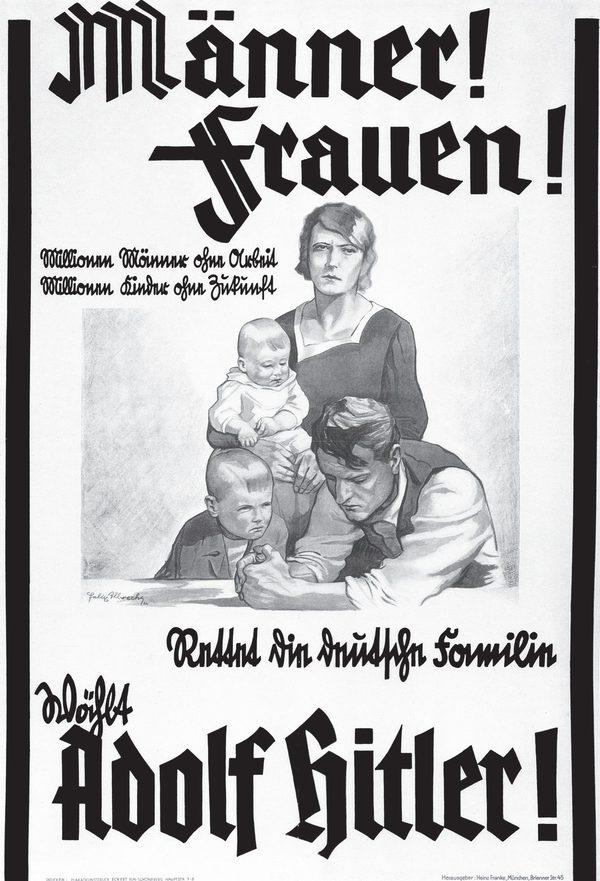
National Socialist (Nazi) Party election poster, Germany, 1932. Text reads: “Men! Women! Millions of men without work. Millions of children without a future. Save the German family. Vote Adolf Hitler!”
B. Explain ONE way the image illustrates the economic situation of the period after the First World War. (1 point)
C. Explain ONE way the rise of the German National Socialist Party led to the Second World War. (1 point)
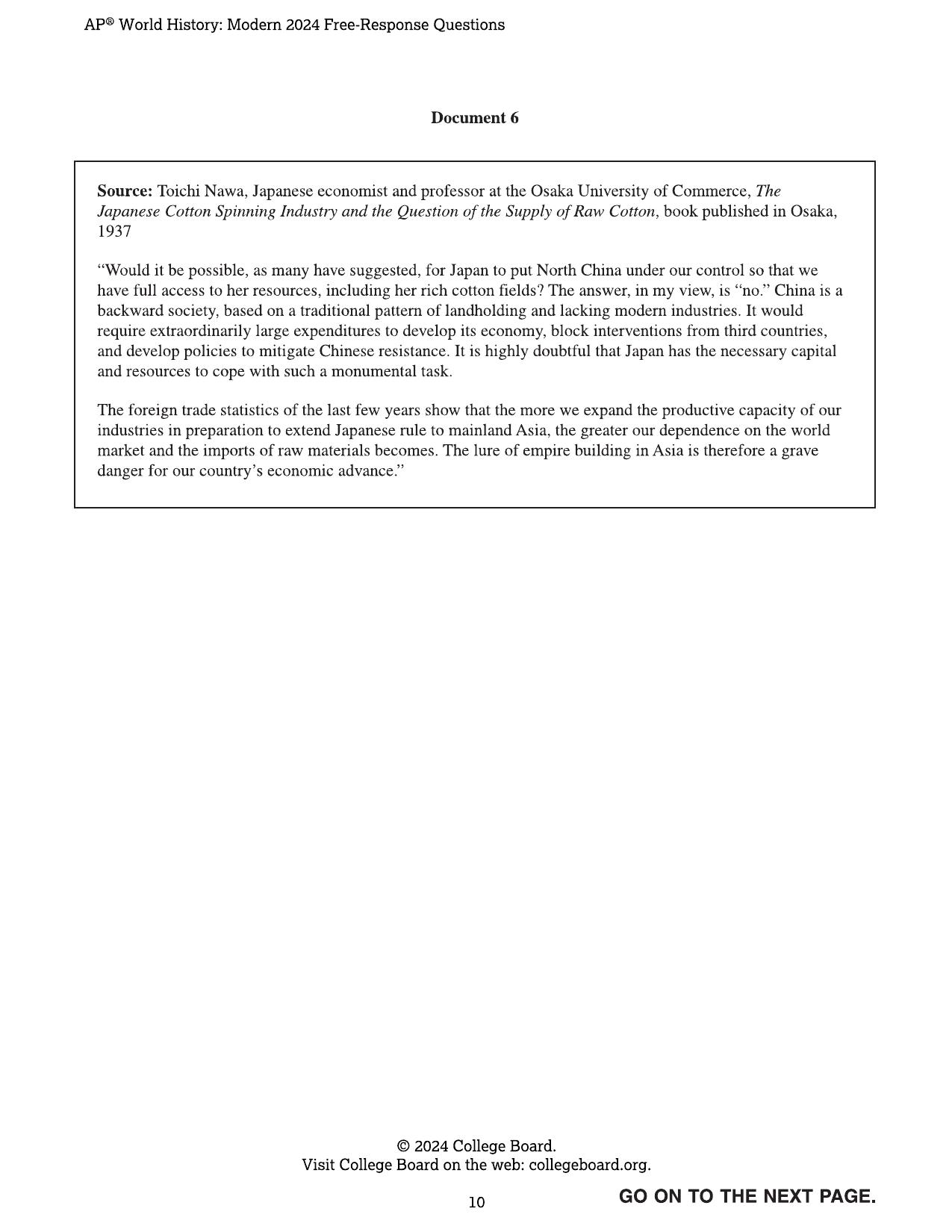
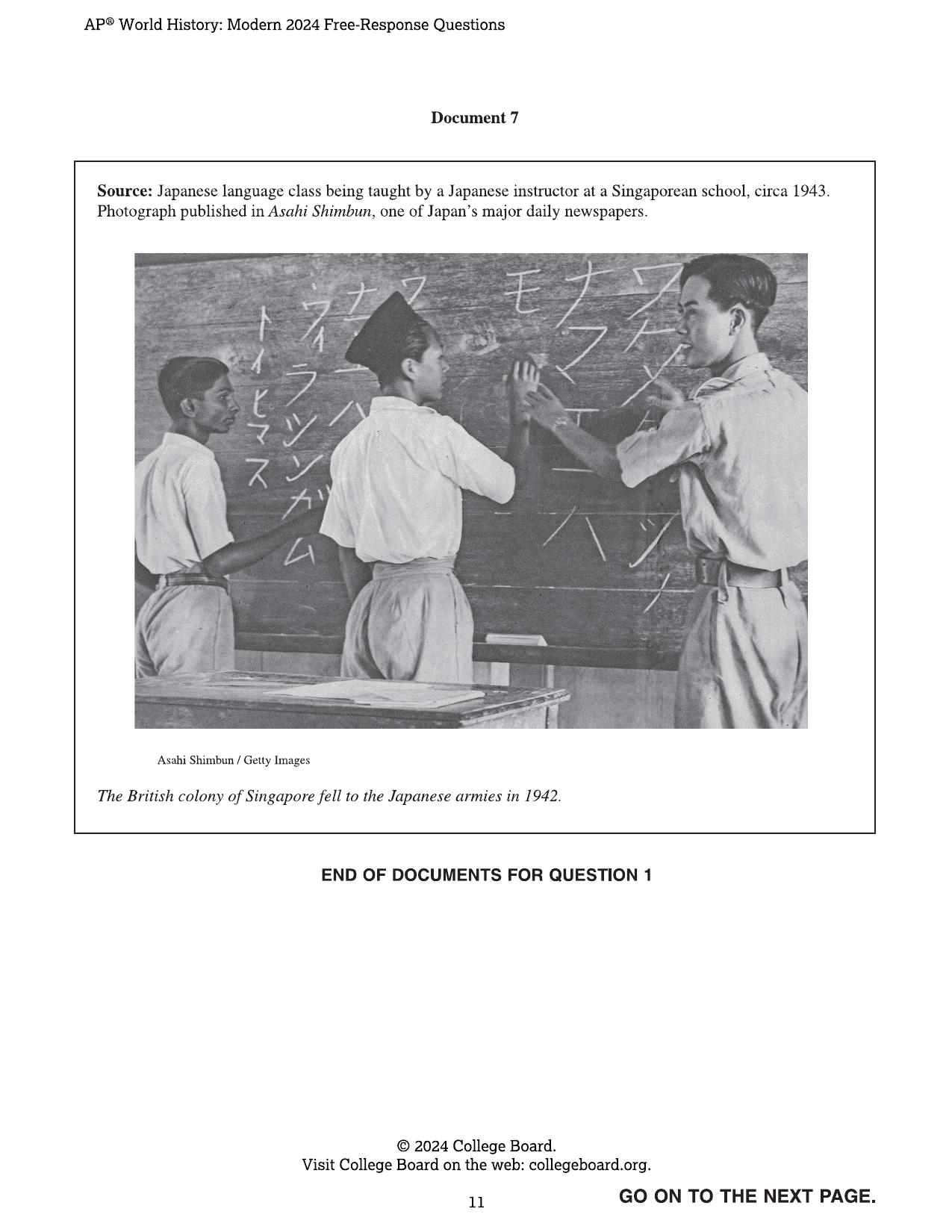
Evaluate the extent to which economic motives were the leading cause of Japanese imperialism in the period circa 1900–1945.
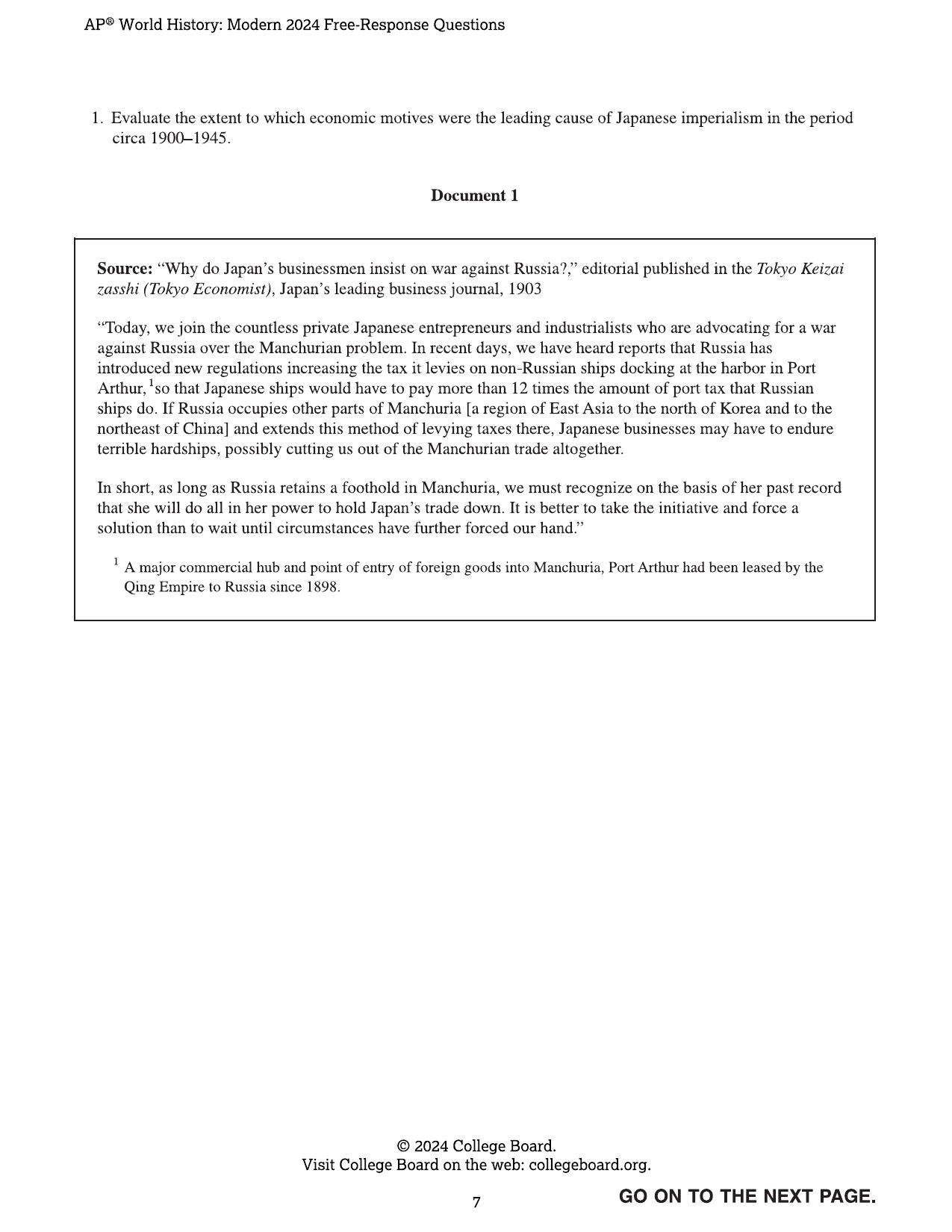
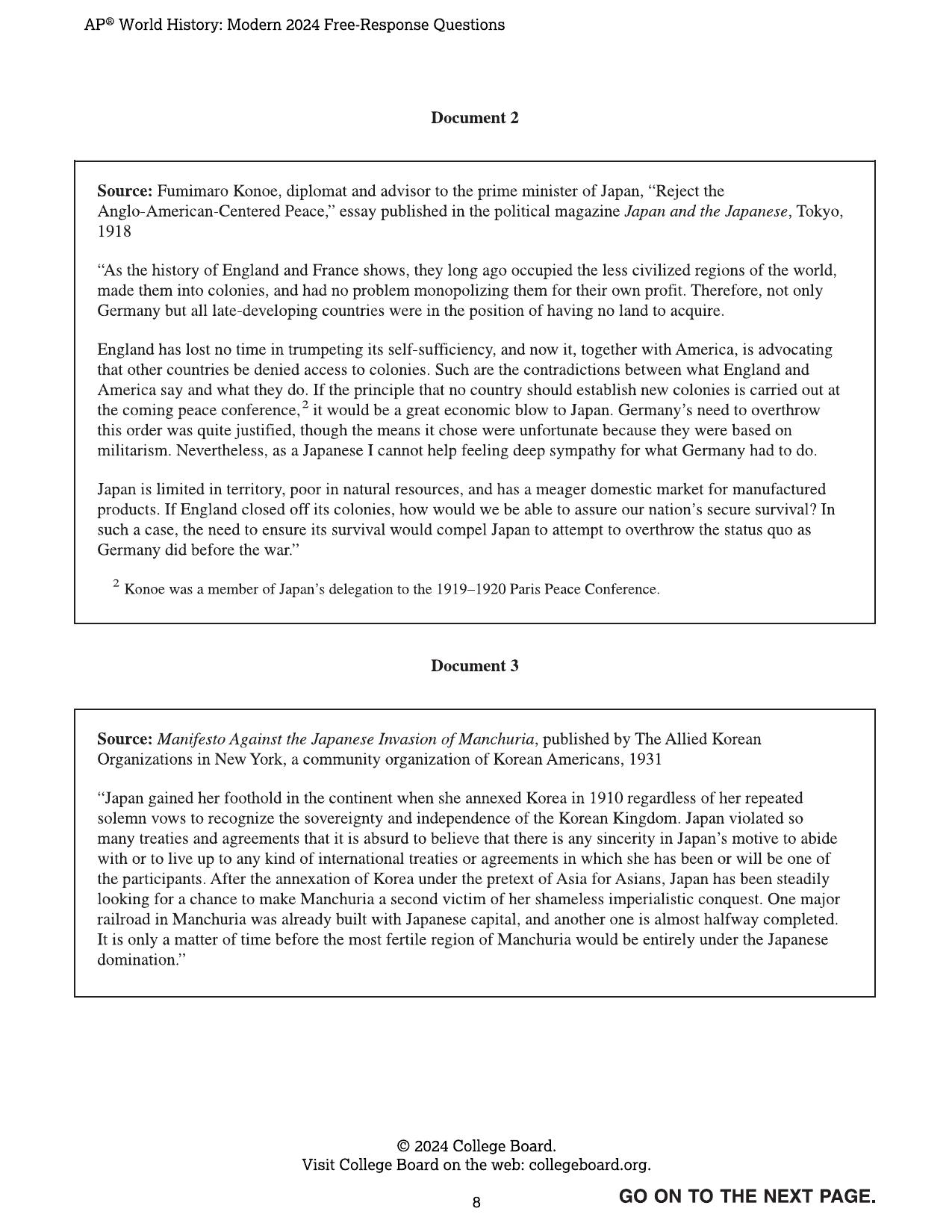
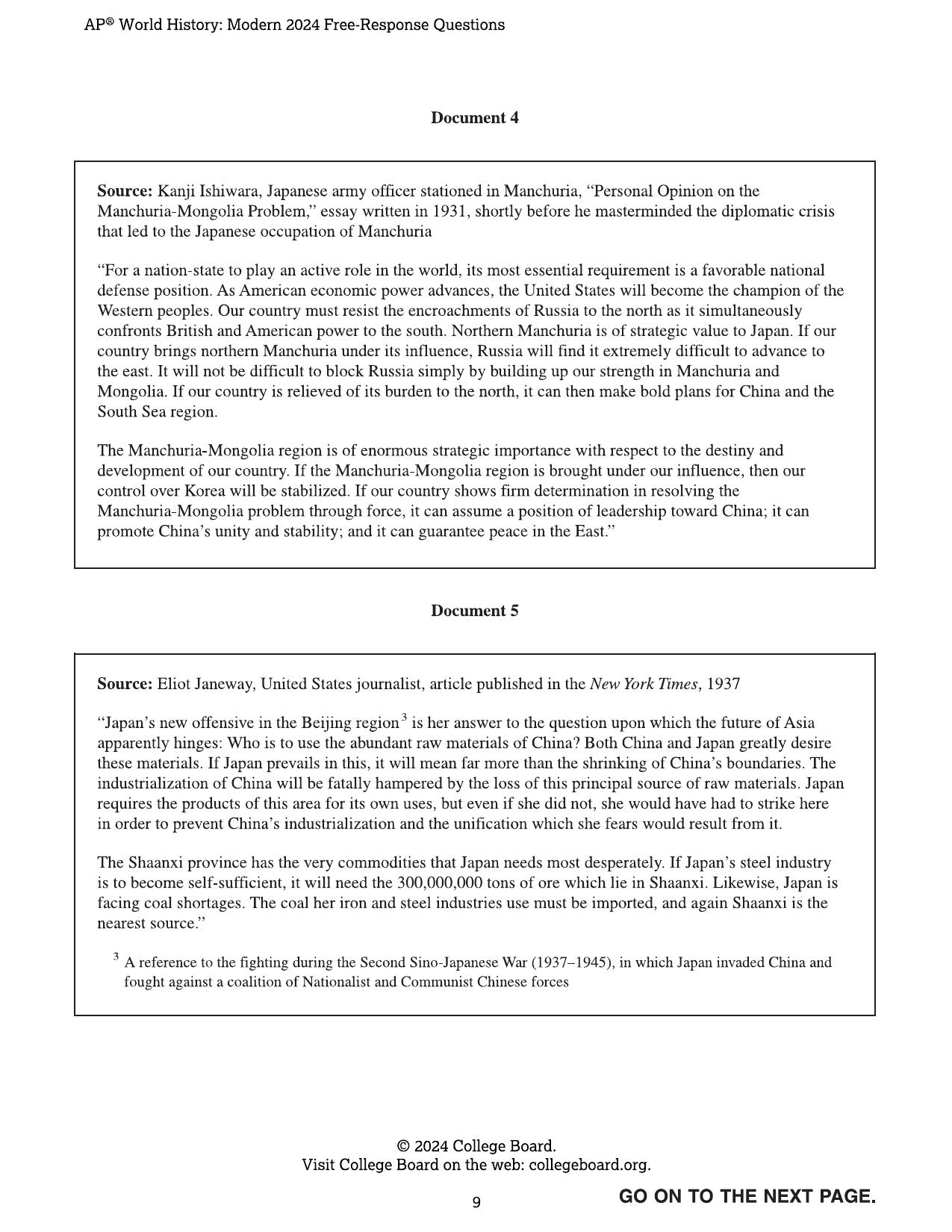
“In the period after 1900, the role of the state in the economy varied, with many states adopting policies to control or manage their economies.
Develop an argument that evaluates the extent to which one or more states controlled their economies in this time period.”
Practice One Skill at a Time
Isolate each rubric point, see what earns it, and get targeted feedback on just that skill.
- Makes a historically defensible claim — does not merely restate or rephrase the prompt
- Establishes a line of reasoning: gives a reason for the claim OR sets up analytic categories
- Use an evaluative adverb: significantly, primarily, largely, fundamentally, to a great extent, to a limited extent
- Can appear in the intro OR conclusion
- Describes a broader historical context — more than a phrase or one-sentence mention
- Relates to events/developments/processes before, during, or after the time frame of the prompt
- Must be relevant to the prompt — not just any historical background
- Must include elaboration connecting the context to the topic
- 1 pt: Provide at least two specific historical examples relevant to the prompt
- 2 pts: Use those examples to support an argument — each piece connects to a claim with explanation
- Evidence must be specific: names, dates, policies, events — not vague generalizations
- Must be described AND explained — don’t just list facts
- For at least 2 documents, explain how the document’s Historical situation, Audience, Purpose, or Point of View is relevant to an argument
- Must explain HOW or WHY — not just identify. The “which means” anchor forces the second move: “[feature] is [X], which means [consequence for argument].”
- The explanation must connect to your argument about the prompt — the sourcing sentence must do work, not just exist
Step 3 — write HAPP analysis for two different documents from the DBQ above. Label each (e.g. “Doc 1:” and “Doc 4:”). You can use different lenses for each.
- Qualify or modify your argument — acknowledge nuance, exceptions, or counterevidence
- Analyze multiple causes/effects, multiple variables, or diverse perspectives
- Make insightful connections across time or geography linked to your argument
- Must be part of the argument, not just a closing phrase
- 1 pt — Reasoning: use a historical reasoning skill (comparison, causation, or continuity & change) to frame or structure the argument — even if uneven
- 1 pt — Complexity: demonstrate a complex understanding — corroborate, qualify, or modify the argument using evidence, sustained across the essay
- This is your lowest-scoring LEQ row on the exam — it is worth deliberate practice
- Neither half can be honestly auto-graded, so this drill coaches you to self-assess instead of faking a score
- Part A — Identify: 1–2 sentences. State a specific political purpose of the Nazi poster.
- Part B — Explain: 2–3 sentences with causal language. HOW does the image illustrate post-WWI economic conditions?
- Part C — Explain: 2–3 sentences with causal language. ONE way the Nazi Party’s rise led to WWII.
Text reads: “Men! Women! Millions of men without work. Millions of children without a future. Save the German family. Vote Adolf Hitler!” — Nazi Party, 1932
Unit 7: Global Conflict
Click each topic to expand the full summary and key terms.
Mr. T’s FRQ Playbook
Everything you need to write the SAQ, DBQ, and LEQ on exam day.
📝 SAQ — Short Answer
Answer ONLY what is asked. No intros, no conclusions.
- Identify = 1–2 sentences
- Describe = 2 sentences
- Explain = 2–3 sentences with "because"
You must answer Q1 and Q2. Choose between Q3 or Q4 for the last one.
📄 Thesis Formula
Works for both DBQ and LEQ. Must be historically defensible with a line of reasoning.
Adverb evaluates extent: significantly, fundamentally, minimally, primarily, negatively…
🕐 Contextualization
A historical process before/during the prompt period that led to the topic.
- Don't start at "the dawn of man"
- Stay within ~50 years of the prompt
- Must be 2–3 full sentences
- Explain HOW it connects to the prompt
📄 DBQ Evidence
- Points 1–2: Accurately use 4+ of 7 docs.
- Point 3: Outside evidence — a relevant fact NOT in the documents
🔍 HIPP — Sourcing
Apply to at least 2 documents. Pick ONE element per doc.
Historical Situation
Intended Audience
Point of View
Purpose
End with: "This alters/supports my understanding because…"
📝 LEQ — Long Essay
No documents — everything from memory.
- Causation: What caused / what resulted
- CCOT: What changed and what stayed the same
- Comparison: Similarities and differences
✦ Explain both cause AND effect, or both similarity AND difference
✦ Connect across time periods or geographic areas
✦ Use all 7 documents effectively (DBQ) or HIPP 4+ documents
A counterargument paragraph can earn complexity — but only if it is a full paragraph with evidence, not just a sentence.
SPICE-T Analysis
Unit 7 — Global Conflict (c. 1900–c. 1945) through the AP World History thematic lens.
- Total war mobilized entire civilian populations; women entered industrial and military support roles
- Holocaust: Nazi racial ideology led to the systematic genocide of 6 million Jews and millions of others
- Great Migration: millions of Black Americans moved north seeking industrial jobs and escape from Jim Crow
- State propaganda dehumanized enemies and shaped public opinion in all warring nations
- Post-WWI upheaval triggered waves of labor strikes, revolutions, and women’s suffrage movements
- Colonial soldiers from Africa and Asia fought for European empires, fueling demands for independence
- WWI triggered the collapse of four empires: Ottoman, Austro-Hungarian, Russian, and German
- Treaty of Versailles imposed crushing reparations on Germany, breeding the resentment that enabled Hitler
- Russian Revolution (1917) created the world’s first communist state and began the Soviet experiment
- Fascism rose in Italy (Mussolini) and Germany (Hitler) as a violent reaction to liberal democracy
- League of Nations failed to prevent fascist aggression, exposing the limits of collective security
- Anti-colonial nationalism surged: Gandhi’s nonviolent movement in India, May Fourth Movement in China
- Industrial-scale trench warfare permanently scarred the landscape of France and Belgium
- Chemical weapons (mustard gas, chlorine) contaminated soil and water and caused mass casualties
- Massive destruction of cities, ports, and railroads in both World Wars required decades of rebuilding
- Atomic bombs dropped on Hiroshima and Nagasaki caused unprecedented environmental devastation
- War economies diverted natural resources — oil, rubber, steel — to military production on industrial scales
- Spanish flu pandemic (1918) killed 50–100 million people, amplified by wartime troop movements
- “Lost Generation” writers (Hemingway, Owen, Remarque) captured WWI’s disillusionment in literature
- Nazi regime promoted Aryan cultural supremacy; “degenerate” modern art was banned and destroyed
- Hollywood and state film propaganda shaped domestic and international perceptions of both wars
- Modernist movements (Dada, Surrealism, Expressionism) responded to the trauma of industrial warfare
- Jazz and blues music spread globally through wartime migration and radio broadcasts
- Anti-colonial intellectuals challenged Western cultural supremacy through Négritude and nationalist writing
- Great Depression (1929) spread globally through bank failures, deflation, and collapsed trade
- New Deal and Keynesian economics argued governments must actively intervene to stabilize economies
- Nazi rearmament used state investment to eliminate unemployment and rebuild Germany’s war capacity
- WWII mobilization effectively ended the Great Depression through massive government spending
- Lend-Lease program (1941) linked US and Allied economies before America formally entered the war
- War reparations and interwar debt created economic instability that made fascism politically viable
- Machine guns, tanks, barbed wire, and heavy artillery industrialized mass killing in WWI
- Military aviation evolved from basic reconnaissance to strategic bombing campaigns in WWII
- Radio enabled real-time state propaganda to reach millions of civilians for the first time
- Manhattan Project (1942–45) produced the atomic bomb, inaugurating the nuclear age
- Radar and sonar were developed as critical defensive and offensive military technologies in WWII
- Synthetic rubber and oil production allowed Germany and Japan to substitute for blockaded imports
Go Beyond Identification
Don't just name the source feature — explain why it matters for your argument. Practice the "which means" move.
Test Your Knowledge
Choose a game mode to review Unit 7 with your class or on your own.
Class Slides
Your full lecture slides alongside topic-by-topic analysis notes. Use these to review key arguments, vocabulary, and connections.
Visual Sources & HIPP Analysis
7 AP-authentic visual stimuli — photographs, lithographs, maps, and paintings. Study each source, answer the AP question, then complete your own HIPP analysis and compare to the model.
Progress Dashboard
Enter the teacher password to view student data and export reports.